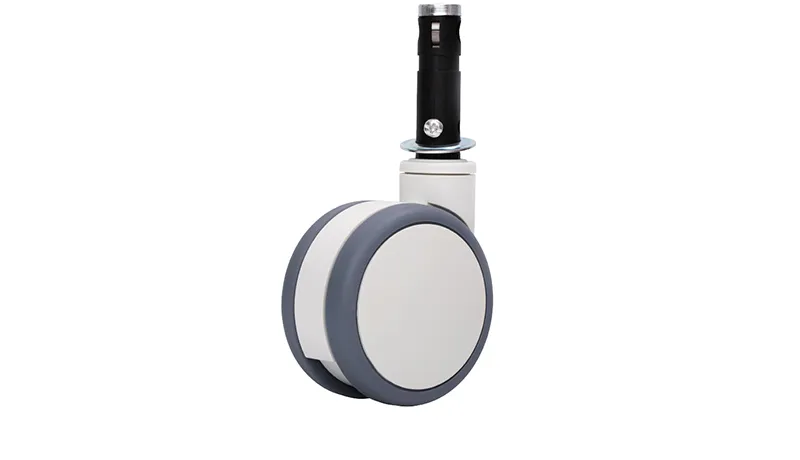
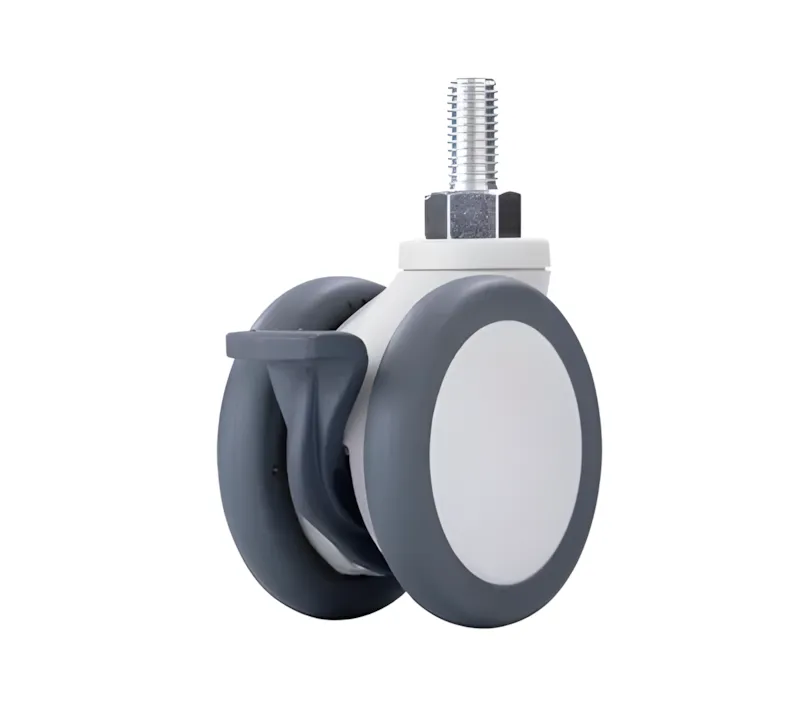
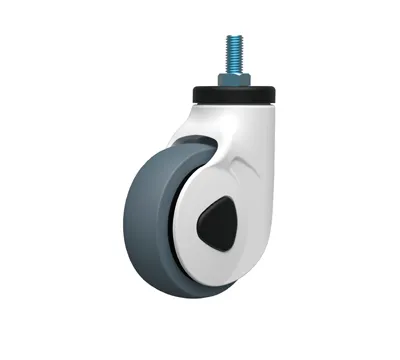
Robots that work in hospitals, laboratories, offices, and commercial buildings often need flexible movement in narrow indoor spaces. This is why many engineers compare omnidirectional wheels, omni wheels, and mecanum wheels during platform design. Both wheel types can support special movement patterns, but they are not the same.
SECURE provides omni wheels and robot caster solutions for service robots, medical robots, AMR platforms, and intelligent equipment. This guide explains the difference between mecanum and omni wheels and how to choose the right multidirectional wheel for a robot platform.
What Are Omni Wheels?
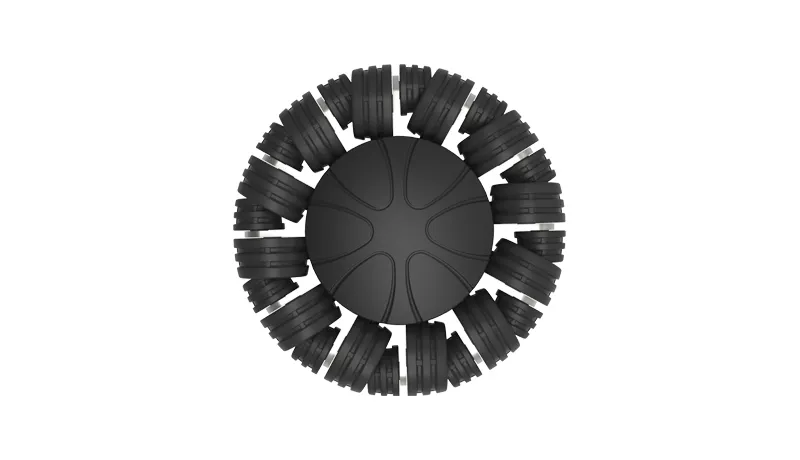
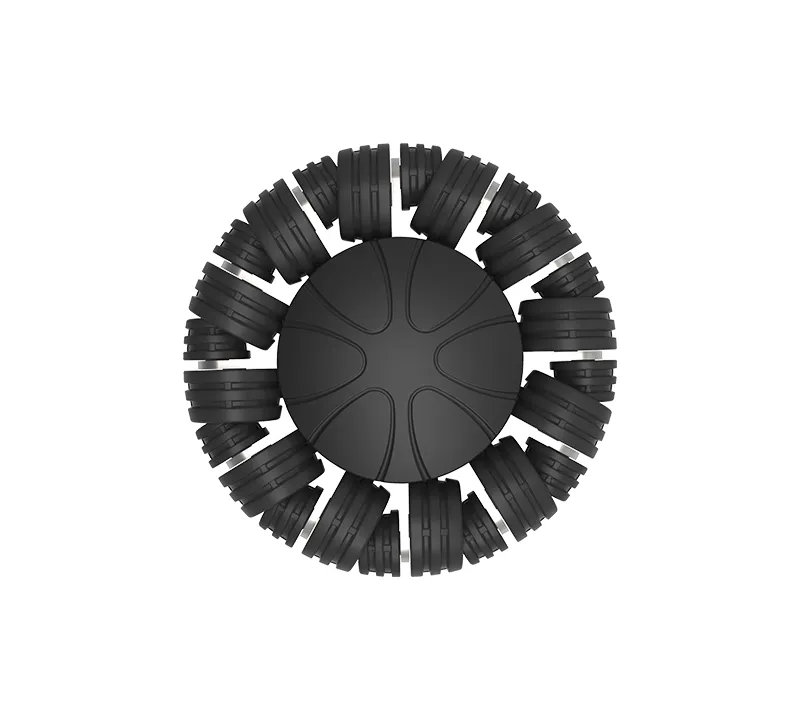
Omni wheels are wheels designed with rollers around the wheel body. This structure allows movement in more than one direction when used in the correct wheel layout. An omni wheel can help a robot turn flexibly, move laterally, or reposition itself in a limited space.
In many robot applications, omnidirectional casters or omni wheels are selected when compact turning and multi-directional movement are more important than high outdoor traction.
What Are Mecanum Wheels?
Mecanum wheels also use angled rollers, but the roller arrangement and platform control method are different from standard omni wheels. Mecanum wheel platforms are commonly used when a robot needs diagonal movement, lateral movement, and rotation through a specific four-wheel layout.
Mecanum wheels can be effective for certain robot platforms, but they may require more precise control and a carefully designed wheel arrangement. For simpler compact robot movement, omni wheels may be easier to apply.
Omni Wheels vs Mecanum Wheels: Comparison Table
Factor | Omni Wheels | Mecanum Wheels |
Main feature | Multi-directional movement with roller structure | Lateral, diagonal, and rotational movement with angled rollers |
Typical layout | Three-wheel or four-wheel omni layouts depending on design | Usually four-wheel mecanum layout |
Control complexity | Depends on layout, often simpler for compact platforms | Usually requires more coordinated motor control |
Best for | Service robots, medical robots, indoor multi-directional platforms | AMR platforms requiring lateral and diagonal movement |
Selection focus | Load, roller material, wheel diameter, layout, and floor condition | Motor control, wheel orientation, platform stability, and payload |
Related SECURE page | Omni Wheels | Review by project requirements with SECURE support |
How to Choose a Multidirectional Wheel
When choosing a multidirectional wheel, buyers should start with robot platform parameters. The most important information includes platform weight, payload, wheel quantity, drive mode, and control method. Without these details, it is difficult to recommend the right wheel type.
The total working weight should include the robot body, battery, payload, and any mounted devices. The drive mode should clarify whether the robot uses passive wheels, motor-driven wheels, hub motor wheels, or an external drive system. The control method should confirm whether movement is controlled by a robot controller, PLC, remote system, or AGV/AMR control platform.
Robot Platform Parameters to Confirm
Parameter | What to Confirm | Why It Matters |
Platform weight | Robot body, battery, and structure weight | Determines the basic load requirement |
Payload | Goods, tools, sensors, or medical equipment carried by the robot | Affects total working weight and safety margin |
Wheel quantity | 3-wheel, 4-wheel, or custom layout | Affects stability and load distribution |
Drive mode | Passive, motor-driven, hub motor, or external drive | Determines whether standard omni wheels or powered systems are needed |
Control method | Robot controller, PLC, remote control, or AMR system | Affects movement accuracy and wheel layout |
Floor condition | Hospital floor, tile, lab floor, or smooth indoor surface | Influences roller material, noise, and traction |
Turning requirement | Small-radius turning, lateral movement, or rotation | Helps decide whether omni wheels are suitable |
When Are Omni Wheels a Better Choice?
Omnidirectional wheels are suitable when the robot needs flexible indoor movement, compact turning, and space-saving mobility. They can be used in service robots, medical robots, mobile platforms, and intelligent devices that operate on relatively smooth indoor floors.
For medical environments, smooth rolling, low noise, and stable movement are important. If the robot moves around patients, staff, or sensitive equipment, wheel material and platform stability should be reviewed carefully.
When Are Mecanum Wheels a Better Choice?
Mecanum wheels may be suitable when the platform needs lateral and diagonal movement with a four-wheel drive system. They can provide strong maneuverability, but the control system and mechanical layout must be planned carefully.
If the platform is heavy, moves at higher speed, or needs accurate positioning, engineers should review load capacity, roller material, motor control, and floor condition before choosing mecanum wheels.
Internal Linking for Robot Mobility Selection
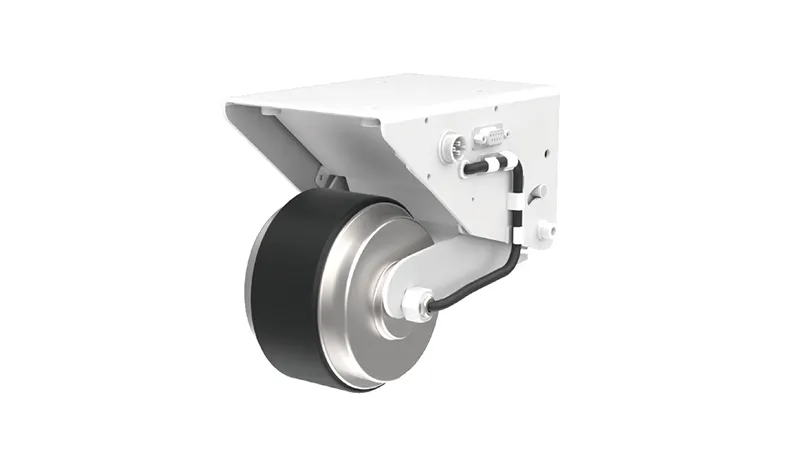
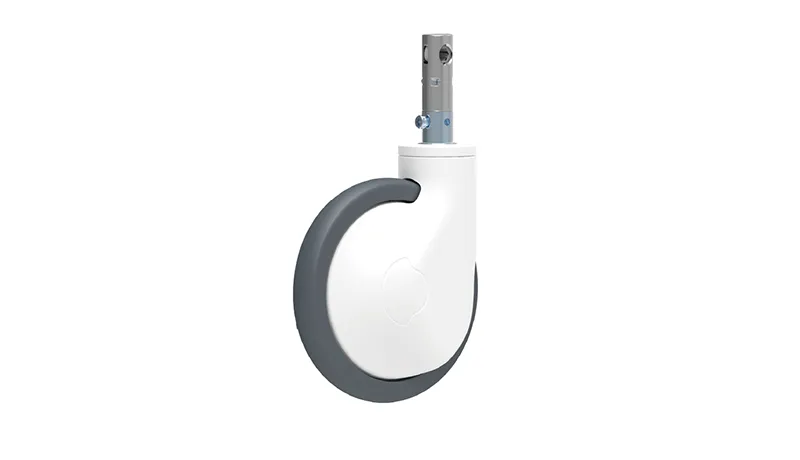
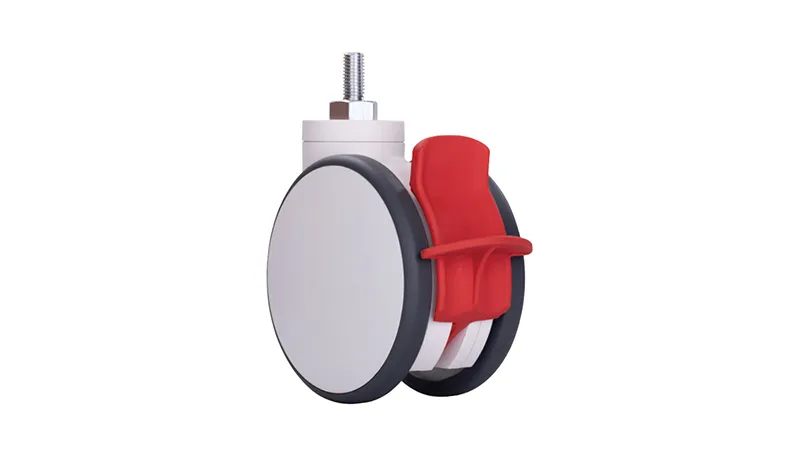
If your project requires a standard robot support solution, visit SECURE robot casters. If the platform needs flexible multi-directional movement, review SECURE omni wheels. If the project requires integrated drive, SECURE hub motor wheels may also be relevant.
Conclusion
Both omni wheels and mecanum wheels can support special robot movement, but the right choice depends on platform weight, payload, drive mode, control method, movement requirement, and floor condition. A multidirectional wheel should never be selected only by wheel diameter or appearance.
For AMR and service robot projects, provide the robot weight, payload, wheel layout, control method, and floor type first. SECURE can then help recommend suitable omnidirectional casters, omnidirectional wheels, or other robot mobility solutions.
FAQ
What is a multidirectional wheel?
A multidirectional wheel is designed to support movement in more than one direction, depending on wheel structure and robot layout.
Are omni wheels and mecanum wheels the same?
No. Both can support special movement, but their roller structures, layouts, and control requirements are different.
Where are omnidirectional wheels used?
Omnidirectional wheels are used in service robots, medical robots, mobile platforms, AMR systems, and intelligent indoor equipment.
What information is needed before choosing omni wheels?
Provide platform weight, payload, wheel quantity, drive mode, control method, floor condition, and movement direction.