Mobility as a Silent Foundation of Modern Healthcare Equipment
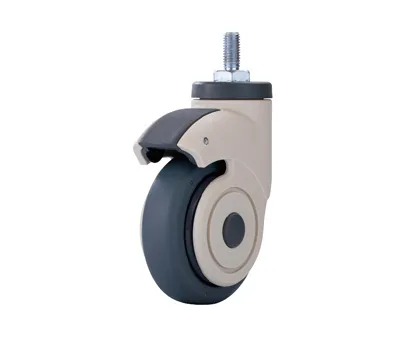
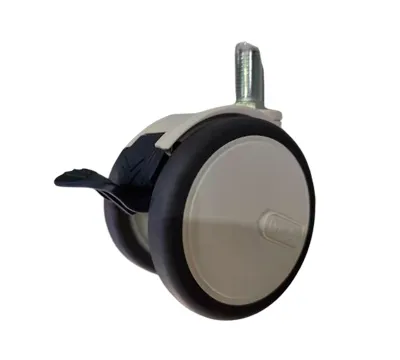
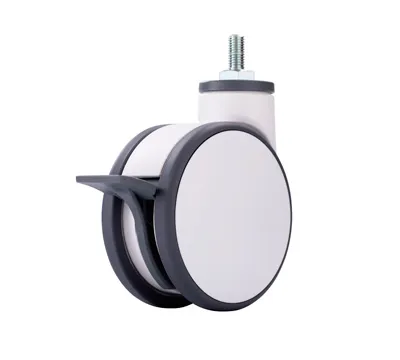
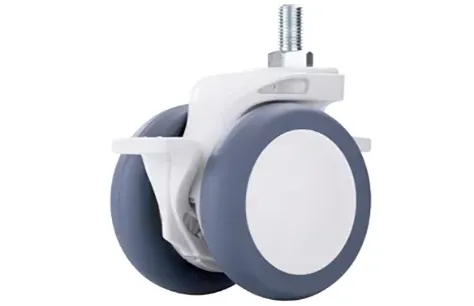
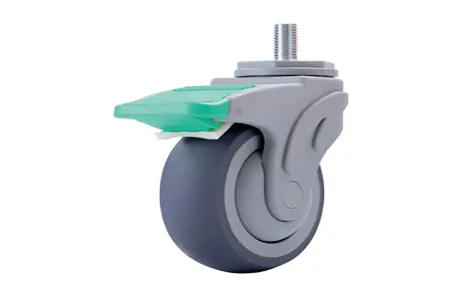
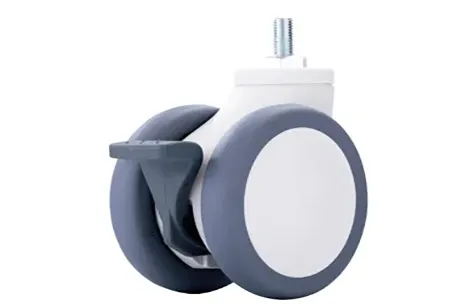
In modern healthcare environments, mobility has become an invisible but essential foundation of daily operations. Every movement of hospital beds, diagnostic devices, treatment carts, surgical equipment, and rehabilitation systems depends on reliable casters for medical equipment that ensure smooth, stable, and controlled motion.
As healthcare systems continue to evolve toward higher efficiency and patient-centered care, the expectations placed on mobility components have increased significantly. Beyond load capacity, durability, and maneuverability, hospitals and care institutions now place strong emphasis on quiet performance, because sound directly influences patient comfort, sleep quality, stress levels, and even recovery speed.
This shift has transformed medical casters from simple mechanical parts into precision-engineered components that must integrate structural stability, ergonomic control, and acoustic optimization. In this context, the performance of medical caster wheels becomes a direct contributor to healthcare quality rather than just equipment functionality.
Why Noise Control Has Become a Core Requirement for Medical Wheels
Unlike industrial or commercial environments, healthcare spaces require carefully controlled acoustic conditions. Patients often spend extended periods in bed, and even low-level mechanical sounds can interrupt rest, increase anxiety, or reduce perceived care quality. As a result, medical castor wheels must be engineered specifically to minimize both rolling noise and vibration transmission.
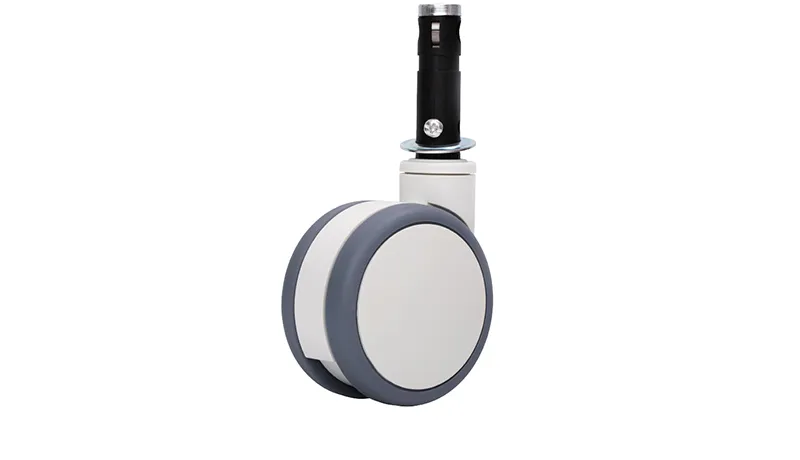
High-quality medical wheels achieve this through a combination of material science and structural optimization. Soft yet durable materials such as TPU and TPR are widely used in modern medical equipment wheels because they significantly reduce friction noise at the contact surface. These materials also help absorb micro-vibrations that would otherwise be transferred into the bed frame or equipment structure.
In addition, precision bearings are a key factor in acoustic performance. In advanced medical device caster systems, high-tolerance bearings ensure smooth rotation with minimal internal friction. This eliminates common noise sources such as squeaking, uneven rolling, or metallic grinding, which are often found in low-quality caster systems.
Structural stability is equally important. A well-designed caster medical system maintains tight assembly tolerances, preventing looseness that can develop over time due to repeated loading cycles. Even small structural gaps can amplify vibration, which becomes noticeable as noise in quiet hospital environments. By controlling structural integrity, modern medical casters maintain consistent performance even under long-term continuous use.
Engineering Stability and Silence in Medical Equipment Wheels
The performance of medical equipment wheels is the result of multiple engineering systems working together. Load distribution, tread design, swivel precision, and material elasticity all contribute to how smoothly and quietly a wheel performs under real-world healthcare conditions.
In hospital applications, medical equipment casters must support frequent directional changes, heavy loads, and continuous movement. When load is distributed evenly across the wheel structure, rolling resistance becomes more stable, which directly reduces vibration and noise generation.
One of the key advantages of modern medical casters is their ability to maintain low noise even under dynamic conditions. During acceleration, turning, or stopping, poorly designed wheels often generate sudden acoustic spikes caused by uneven friction. High-performance systems eliminate this through optimized wheel geometry and improved shock absorption characteristics.
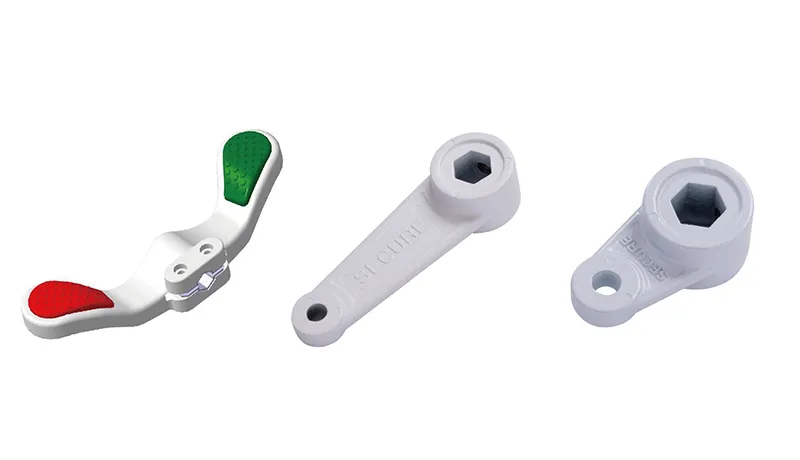
Swivel mechanism precision also plays a crucial role. A smooth and well-balanced swivel design ensures that movement direction changes do not introduce mechanical resistance or vibration. This is particularly important for casters for medical equipment used in confined spaces such as hospital corridors, ICUs, and operating preparation rooms.
As a result, modern medical wheels are no longer just passive components but actively engineered systems that enhance both mobility efficiency and acoustic comfort.

SECURE as a Medical Caster Wheels Manufacturer Focused on Healthcare Precision
As a professional medical caster wheels manufacturer, SECURE focuses on developing mobility solutions specifically designed for the demanding conditions of healthcare environments. The company integrates engineering precision, material innovation, and application-based design to ensure consistent performance across a wide range of medical equipment.
SECURE’s medical equipment casters are widely used in hospitals, nursing homes, rehabilitation centers, and homecare systems. Each product is designed with a focus on stability, durability, and low-noise performance under continuous operation.
As a global wheel medical company, SECURE emphasizes real-world usability. Its medical casters are engineered not only for load-bearing strength but also for acoustic comfort, ensuring that equipment movement does not disturb patients or clinical workflows.
Through continuous development and strict quality control, SECURE ensures that its casters for medical equipment meet the evolving requirements of modern healthcare infrastructure, where precision and silence are equally essential.
Medical Casters in Real Healthcare Use Cases
Core Hospital and Clinical Applications of Medical Casters
According to SECURE’s application system, medical equipment wheels are used across a wide range of healthcare and related environments, forming a complete mobility ecosystem for modern facilities.
In addition to hospital bed wheels, one of the most important applications, medical wheels are also widely used in several key scenarios:
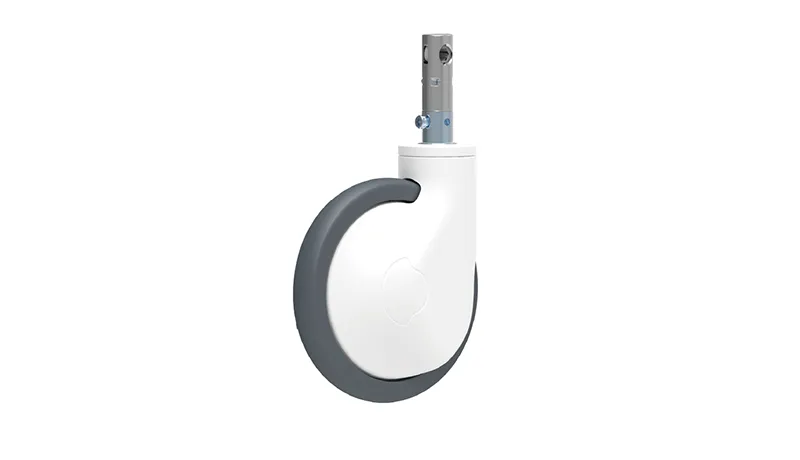
Homecare Bed Wheels are designed for residential healthcare environments, providing stable and quiet movement that supports long-term patient care in home settings. Their low-noise performance is especially important in shared living spaces where comfort and silence are essential.
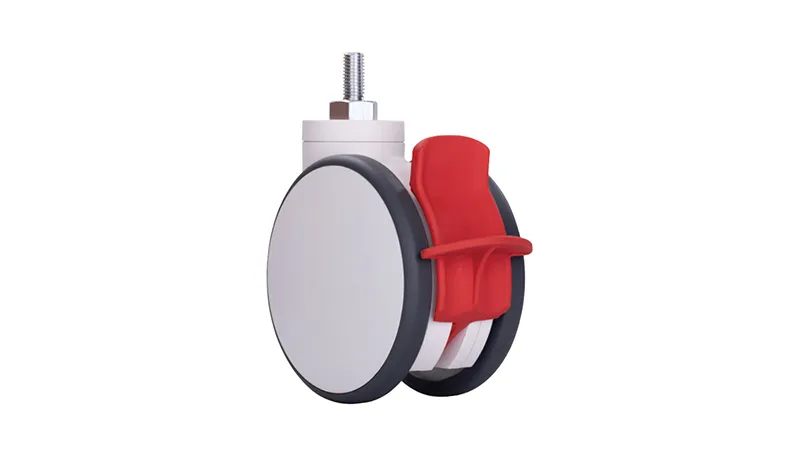
Medical Cart Wheels are used in medication delivery carts, nursing station trolleys, and treatment carts. These systems require smooth rolling performance and controlled movement to ensure operational efficiency while preventing noise disruption during clinical tasks.
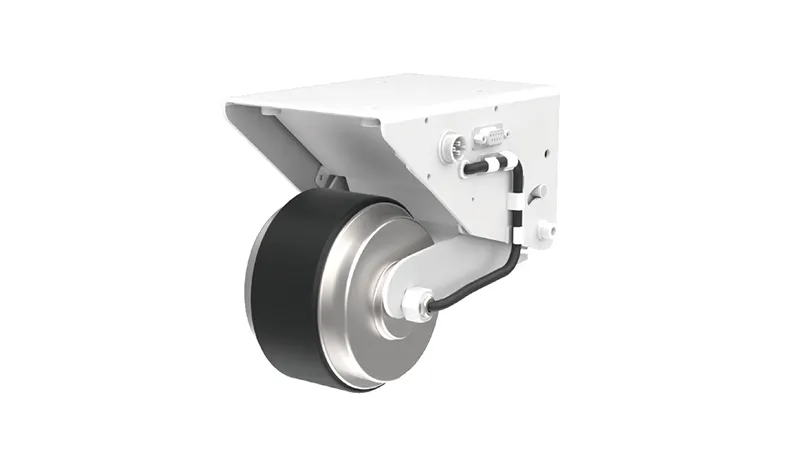
Surgical Robot Wheels are engineered for high-precision environments such as operating rooms. They must support strict cleanliness standards, high-frequency sterilization, and extremely stable positioning while maintaining quiet mobility during equipment adjustments.
Stretcher Cart Casters are designed for patient transport systems, where safety, load capacity, and smooth rolling performance are critical. These casters ensure stable and quiet movement during emergency transfers and routine patient handling.
Medical & Educational Furniture Wheels are used in hospitals, training institutions, and clinical education environments. These casters prioritize low-noise mobility, allowing furniture and equipment to be repositioned smoothly without disturbing surrounding activities.
Across all these applications, medical casters form a unified system that supports both operational efficiency and environmental comfort in healthcare settings.
The Expanding Role of Medical Wheels in Modern Healthcare Systems
The role of medical caster wheels continues to expand as healthcare systems become more mobile, flexible, and technology-driven. Modern hospitals rely on mobile diagnostic systems, adjustable care beds, and transportable treatment units, all of which depend on reliable caster performance.
At the same time, the expectation for acoustic comfort has become increasingly important. Healthcare is no longer defined only by treatment outcomes but also by patient experience. In this context, the silence of medical equipment casters contributes directly to perceived care quality.
Even small improvements in noise reduction can significantly improve patient satisfaction, reduce stress levels, and create a more professional healthcare environment. This is why medical casters are now considered a critical component of healthcare system design rather than secondary hardware.
Conclusion Quiet Mobility as a Standard in Modern Healthcare Systems
The evolution of medical caster wheels reflects a broader transformation in healthcare toward precision, patient-centered design, and environmental quality. Mobility systems are no longer evaluated only by mechanical strength or durability, but also by how quietly, smoothly, and consistently they perform in real clinical conditions.
From hospital beds to surgical systems, from rehabilitation equipment to homecare solutions, modern medical equipment casters play a fundamental role in ensuring safe, stable, and silent mobility across all healthcare environments.
As a leading medical caster wheels manufacturer, SECURE continues to advance this field through engineering-driven innovation and application-focused design. Its medical wheels and medical casters are developed to meet the complex demands of modern healthcare, where performance and silence must coexist.
In today’s hospitals, nursing homes, rehabilitation centers, and homecare environments, quiet mobility is no longer an enhancement—it is a standard requirement for better care, better recovery, and better healthcare experiences.