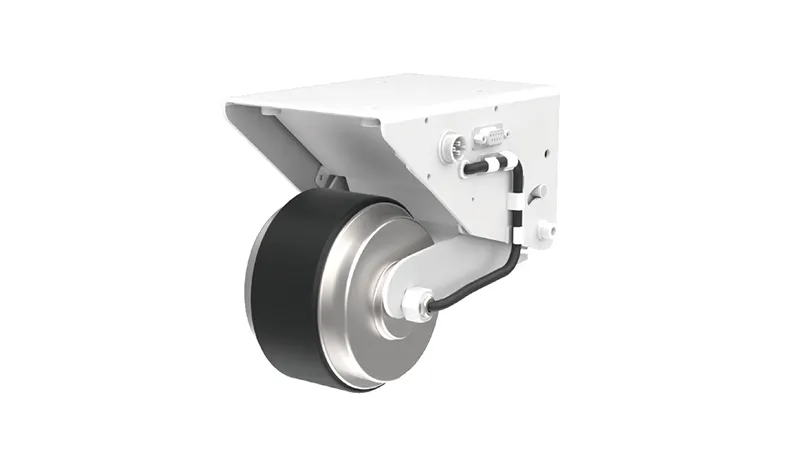
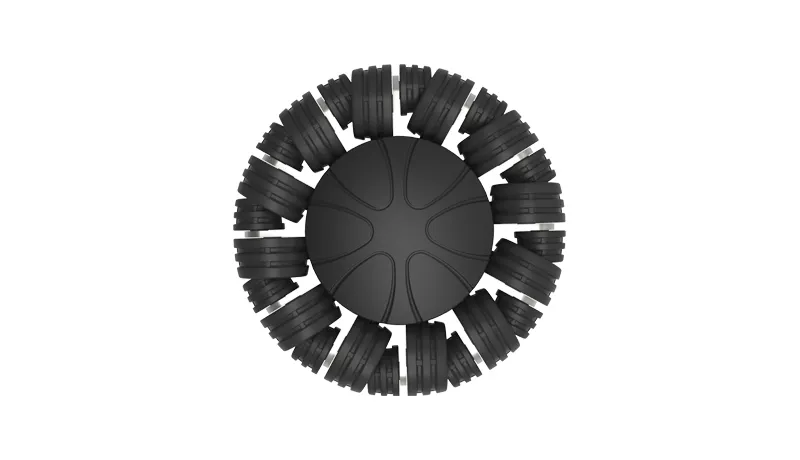
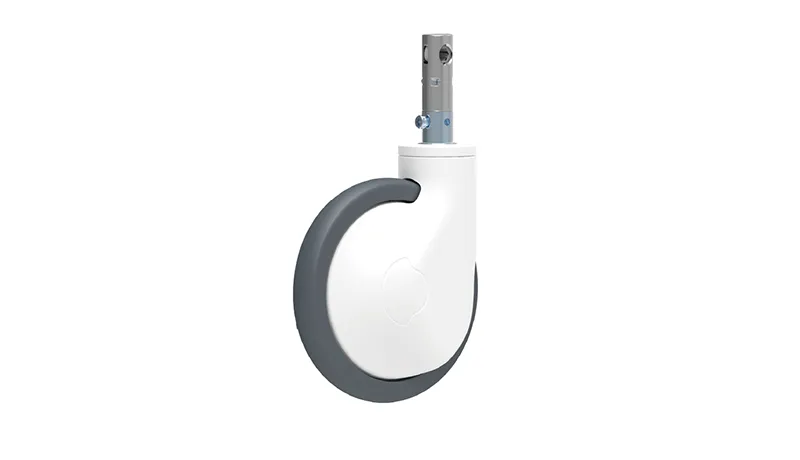
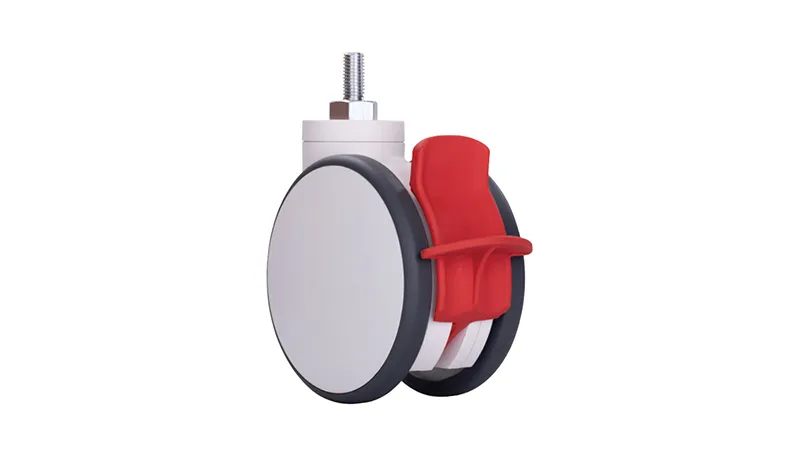
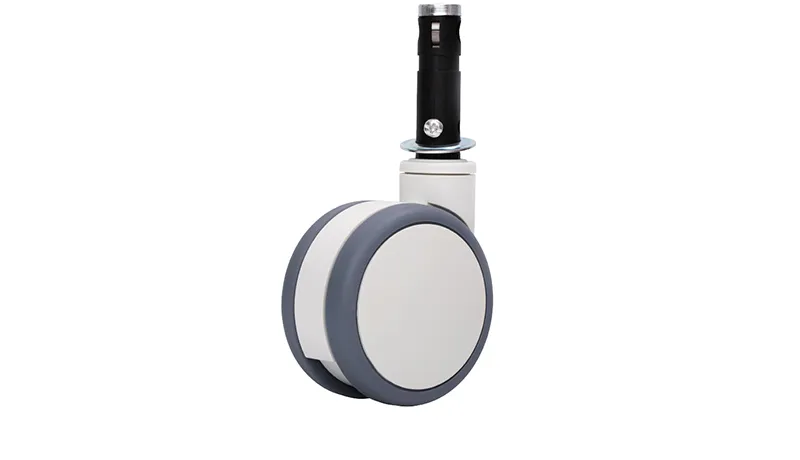

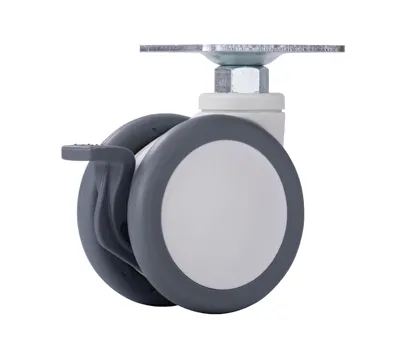
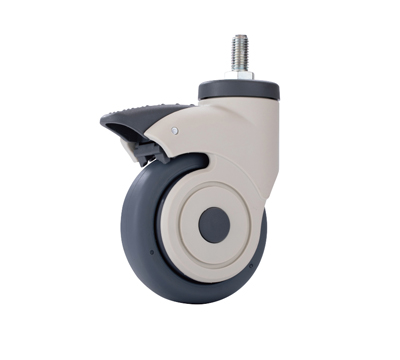
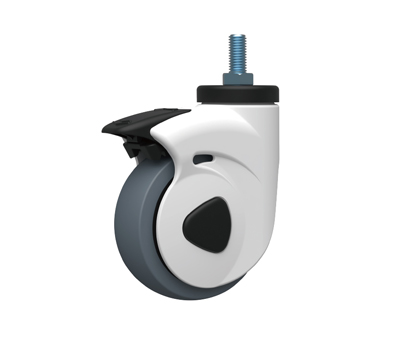
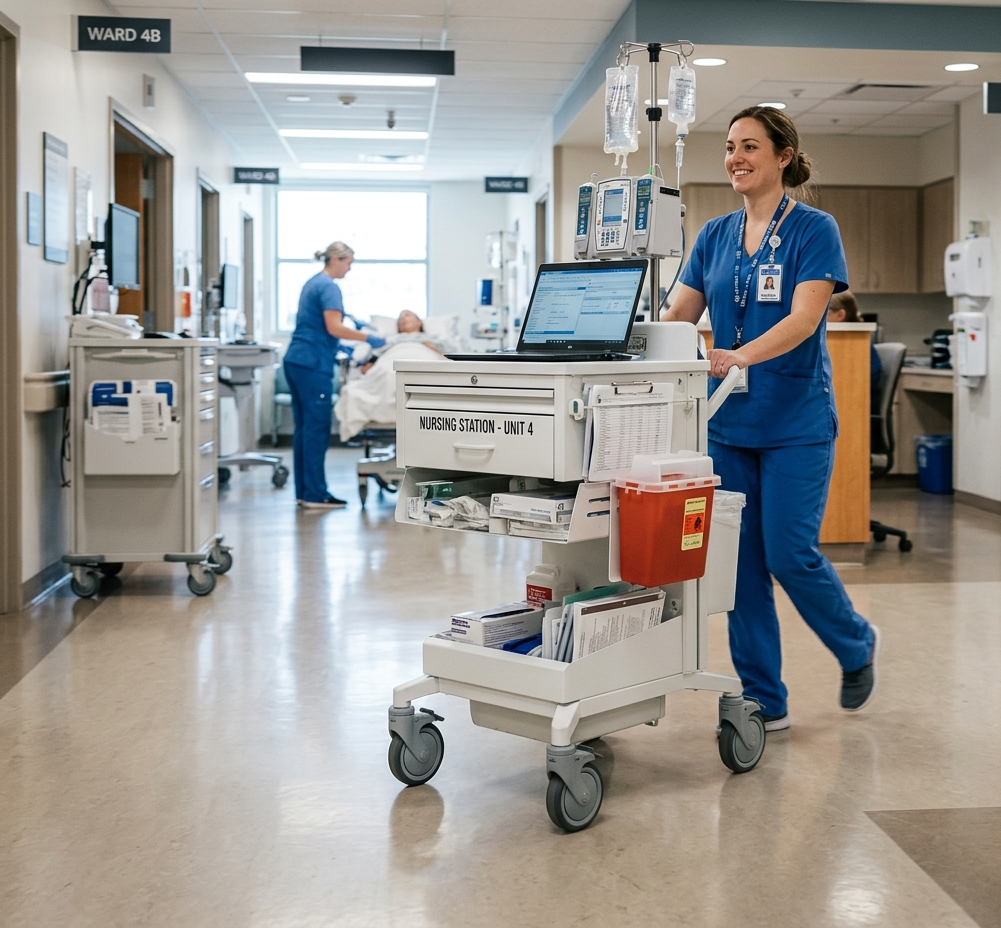




When selecting medical trolley wheels, buyers should consider cart load, movement frequency, floor condition, noise requirement, brake design, installation height and cleaning environment. For lightweight carts, single wheel casters may be suitable. For better stability and smoother steering, twin wheel casters can be considered.
| Cart Type | Typical Mobility Requirements | Recommended Caster | Suggested Wheel Diameter | Recommended Brake Type | Why It Is Recommended |
| Nursing Cart | Frequent movement, flexible turning and quiet operation in wards | N Series Single-Wheel Caster | 75 mm | Full braking | Compact structure and flexible steering make it suitable for lightweight nursing carts and medication carts |
| Medication Cart | Easy maneuvering in narrow corridors and reliable parking during use | N Series Single-Wheel Caster | 75 mm | Full braking | Supports frequent stop-and-go movement while keeping the cart structure compact |
| Anesthesia Cart | Stable movement, precise positioning and secure braking beside the operating table | MY Series Twin-Wheel Caster | 75 mm | Full braking | Twin-wheel construction provides improved stability and load distribution for carts carrying medical supplies and instruments |
| Treatment Cart | Smooth movement between treatment rooms and reliable positioning during procedures | MY Series Twin-Wheel Caster | 75 mm | Full braking | Offers stable steering and dependable braking for medium-load clinical carts |
| Monitor Cart | Smooth rolling, easy obstacle crossing and stable support for medical monitors | NT Series Single-Wheel Caster | 100 mm | Full braking | The larger wheel diameter improves rolling performance and helps the cart move more smoothly across hospital flooring |
| Mobile Medical Workstation | Frequent repositioning, low rolling resistance and controlled movement | NT Series Single-Wheel Caster | 100 mm | Full braking | Suitable for computer carts, monitor workstations and mobile equipment that require easier movement over longer distances |
| Instrument Trolley | Compact installation, quiet movement and easy cleaning | N Series Single-Wheel Caster | 75 mm | Full braking | A practical choice for lightweight instrument trolleys and compact equipment carts |
| Emergency Cart | Fast maneuvering, stable directional control and immediate secure parking | MY Series Twin-Wheel Caster | 75 mm | Full braking | Twin-wheel construction provides better stability during rapid movement and frequent braking |
| Diagnostic Equipment Cart | Stable support, smooth repositioning and protection of hospital flooring | NT Series Single-Wheel Caster | 100 mm | Full braking | Larger wheels help improve rolling smoothness for carts carrying diagnostic devices |
| Heavy Medical Equipment Cart | Higher load support, stable movement and reliable braking | Twin-wheel medical caster selected according to load | Confirm according to equipment | Full braking | Buyers should confirm total equipment weight, payload and load per caster before selecting the final model |
| Selection Factor | What Buyers Should Confirm | Why It Matters |
| Total Working Load | Cart weight, equipment weight, supplies and maximum payload | Determines the required load capacity of each medical cart caster wheel |
| Wheel Diameter | 75 mm or 100 mm based on cart height and movement needs | Larger wheels generally provide smoother rolling and better obstacle-crossing performance |
| Wheel Structure | Single-wheel or twin-wheel caster | Single-wheel casters offer compact installation, while twin-wheel casters provide better stability and load distribution |
| Brake Requirement | Full braking, wheel lock or directional control | Ensures stable parking during treatment, preparation and equipment operation |
| Floor Condition | Tile, PVC, epoxy floor, carpet or thresholds | Influences tread material, rolling resistance, noise and maneuverability |
| Installation Method | Stem size, mounting height and available installation space | Ensures the caster fits the medical trolley frame correctly |
| Hygiene Requirements | Cleaning frequency, disinfectant exposure and sealed structure | Smooth surfaces and sealed structures help reduce dirt accumulation and simplify maintenance |
| Movement Frequency | Occasional movement or continuous daily use | Frequently moved carts require durable wheels, reliable bearings and consistent braking performance |
For accurate medical trolley wheel selection, please provide the cart type, total working load, preferred wheel diameter, brake requirement, installation dimensions and expected order quantity. SECURE can recommend suitable medical cart wheels for nursing carts, anesthesia carts, monitor carts, treatment carts and mobile medical workstations.
Safety: Match load capacity to purpose with safety margin; avoid overload risks.
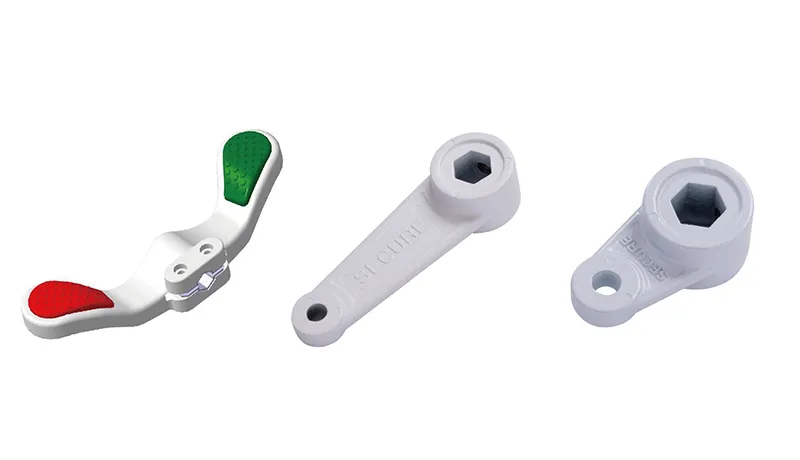
Each medical cart caster wheel is equipped with dual locking systems (wheel lock and directional lock); ensure stable parking when the wheels of cart are stationary.
Secure caster-chassis connection; prevent detachment/jamming.
Functionality: Combine fixed/swivel casters for flexible movement in narrow spaces.
Elastic wheels + bearings for quiet operation and shock absorption.
The hardness and diameter of the wheels of cart are carefully selected to suit medical flooring, ensuring smooth rolling and easy obstacle crossing.
Hygiene: Medical trolley caster wheels are made from antibacterial and corrosion-resistant materials. Their smooth surfaces and sealed structures make them easy to clean and prevent dirt accumulation.
For specialized scenarios, the wheels of cart may feature anti-adhesive designs or protective covers to help reduce cross-contamination risks.
Durability: Built with wear-resistant and aging-resistant materials to withstand frequent use in hospitals. Strong brackets resist rust and deformation, while pre-lubricated bearings ensure smooth operation.
Designed for convenient replacement of vulnerable components, helping extend the service life of the medical cart casters.
Compliance: Meet CE, FDA, etc., medical certifications and standards, ensuring every medical cart caster wheel meets strict safety, quality, and performance requirements for medical applications.
Hospital trolley wheels are used on nursing carts, anesthesia carts, monitor carts, computer carts, treatment carts and mobile medical workstations. A suitable medical cart wheel should support smooth movement, low noise, flexible steering and reliable braking in hospital corridors and clinical environments.
SECURE provides medical cart casters for different cart structures, load requirements and installation methods.

Endoscopy carts carry monitors, processors, light sources, pumps and other sensitive medical equipment. The right endoscopy cart wheel options should provide smooth maneuvering, reliable braking, low rolling noise and stable support during examinations and equipment operation.
| Endoscopy Cart Type | Recommended Caster | Wheel Diameter | Brake Configuration | Selection Advantage |
| Compact Endoscopy Cart | N Series Single-Wheel Caster | 75 mm | Full braking | Compact installation and flexible steering for treatment rooms and narrow clinical spaces |
| Standard Endoscopy Equipment Cart | MY Series Twin-Wheel Caster | 75 mm | Full braking | Improved stability and load distribution for carts carrying monitors, processors and accessories |
| Large or Frequently Moved Endoscopy Cart | NT Series Single-Wheel Caster | 100 mm | Full braking | Larger wheel diameter supports smoother rolling, easier threshold crossing and reduced pushing effort |
| Custom Endoscopy Workstation | Selected according to total cart load and mounting dimensions | 75–100 mm | Full braking | Caster configuration can be matched to equipment weight, cart height, floor condition and installation space |
For accurate selection, confirm the total weight of the cart and mounted equipment, required wheel diameter, mounting height, brake type, floor material and available installation space. Carts carrying sensitive imaging and endoscopy equipment should also prioritize low vibration, quiet rolling and secure parking.
SECURE can recommend suitable medical cart wheels for compact endoscopy carts, mobile imaging workstations and customized clinical equipment platforms.
A medical cart wheel is a specialized caster designed for medical carts, trolleys, and equipment used in hospitals and healthcare facilities. These wheels allow carts to move smoothly and safely while supporting medical equipment and supplies.
A Medical cart caster wheel is designed specifically for medical environments. Compared with standard casters, it usually features quiet operation, higher hygiene standards, corrosion-resistant materials, and reliable braking systems suitable for hospitals.
Yes. Most Medical cart caster wheels are designed with sealed bearings and durable materials, making them easy to clean and maintain. Regular inspection and cleaning help extend the lifespan of the wheels of cart.