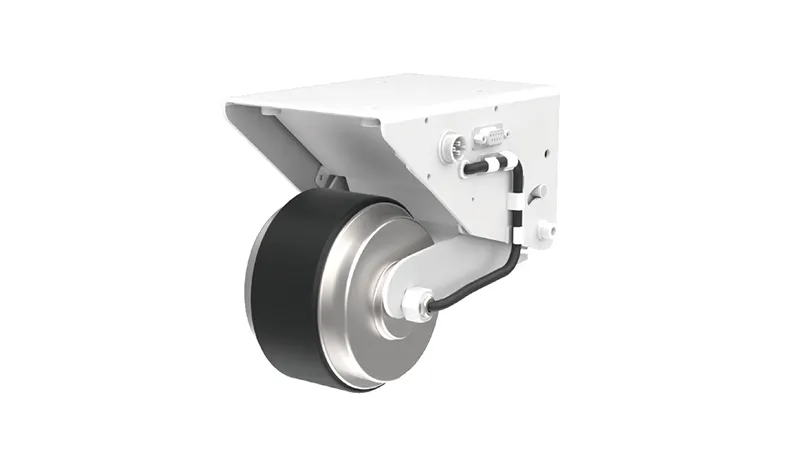
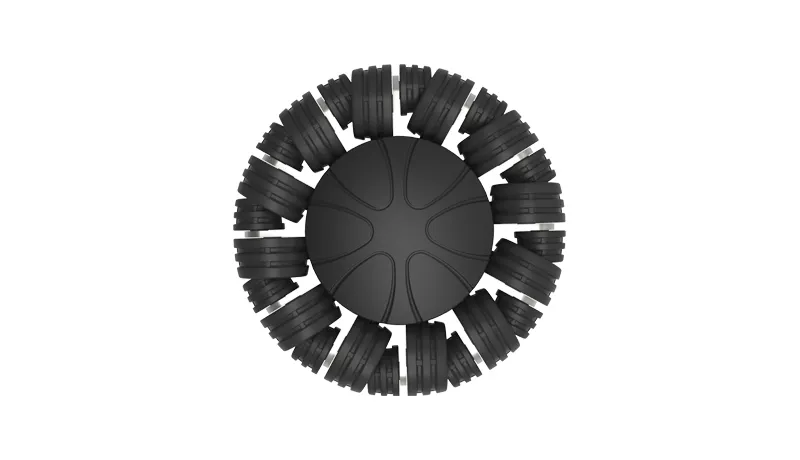
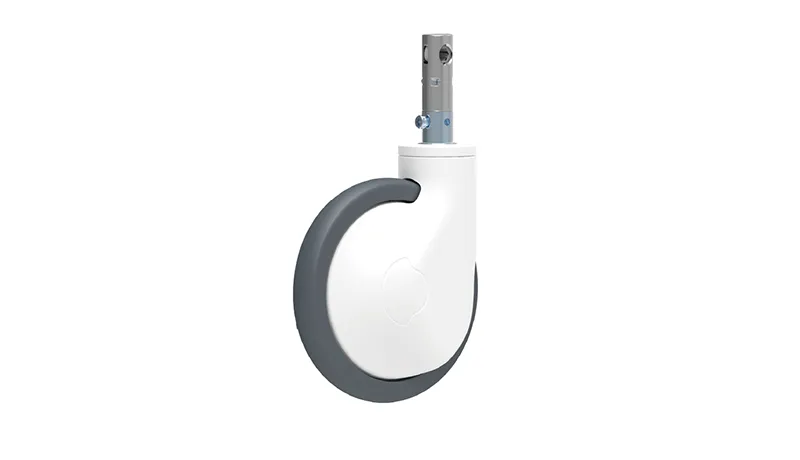
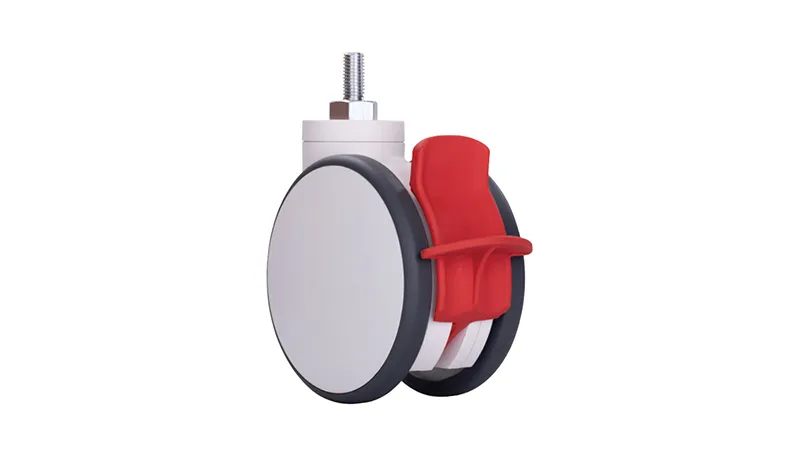


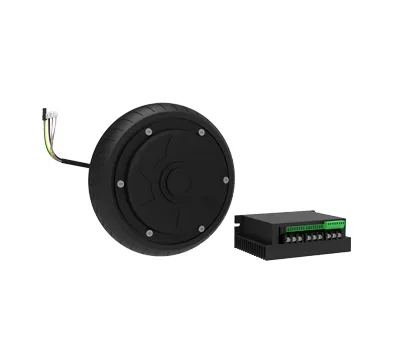
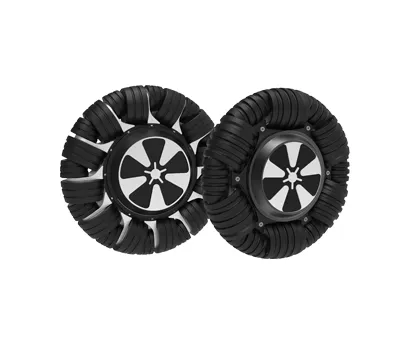



| Specification | Wheel Diameter (mm) | Tread Width (mm) | Self-Weight (kg) | Dynamic Load (kg) | Static Load (kg) | Travel Distance (km) | Obstacle Climbing Height (mm) |
| 5-inch | 127 | 38.5 | 0.6 | 30 | 50 | 1000 | 3 |
| 6-inch | 160 | 53 | 0.9 | 45 | 70 | 1500 | 4 |
| 8-inch | 210 | 57.5 | 1.7 | 60 | 90 | 2000 | 6 |
| 10-inch | 260 | 72.5 | 3.56 | 80 | 100 | 3000 | 12 |
| 12-inch | 316 | 74 | 5.75 | 90 | 120 | 5000 | 12 |
| Tread material: TPU/rubber | |||||||
| Working environment: -30°C/+80°C | |||||||
Both omni wheels and mecanum wheels can support special movement patterns, but they are used in different robot designs. An omni wheel is often selected for compact multi-directional movement, while mecanum wheels are commonly used for platforms requiring diagonal and lateral movement through a specific wheel arrangement.
| Comparison Factor | Omni Wheel | Mecanum Wheel |
| Movement Pattern | Supports forward, backward, lateral and rotational movement when multiple omni wheels are arranged correctly. Common configurations include three-wheel and four-wheel platforms. | Supports forward, backward, lateral, diagonal and rotational movement, usually through a coordinated four-wheel drive system. |
| Wheel Structure | Uses small rollers mounted around the wheel circumference, generally at 90° to the main wheel rotation direction. | Uses multiple angled rollers, commonly arranged at approximately 45° around the wheel body. |
| Typical Wheel Layout | Can use three-wheel, four-wheel or customized layouts depending on platform design. | Usually requires four mecanum wheels arranged in a specific left-hand and right-hand roller orientation. |
| Drive Requirement | Can be used as passive support wheels or individually driven wheels, depending on the robot structure. | Normally requires each wheel to be independently driven and precisely controlled. |
| Control Complexity | Moderate. A three-wheel omni platform may require fewer motors and simpler kinematic control than a four-wheel mecanum platform. | Relatively high. Movement depends on coordinated speed and direction control of all four wheels. |
| Turning Performance | Suitable for compact turning, lateral movement and rotation in confined spaces. | Suitable for lateral, diagonal and rotational movement without changing the platform orientation. |
| Positioning Accuracy | Suitable for service robots and indoor platforms, but accuracy depends on roller quality, floor condition and control system. | Can provide flexible movement, but roller slippage and control synchronization may affect precise positioning. |
| Load Distribution | Depends strongly on wheel quantity and platform layout. Load must be calculated according to the actual number of wheels supporting the platform. | Four-wheel layouts generally provide a wider support base, but uneven floors may cause inconsistent wheel contact. |
| Floor Requirements | Performs best on smooth, flat indoor surfaces such as hospital floors, laboratories and commercial spaces. | Also requires relatively smooth and level surfaces for stable movement and consistent roller contact. |
| Noise and Vibration | Roller joints may generate vibration, but suitable tread materials and low-speed operation can improve performance. | Angled rollers may create more vibration and rolling noise, particularly on uneven surfaces or at higher speeds. |
| Control Cost | Usually lower for simple three-wheel or passive-wheel configurations. | Usually higher because four motors, encoders and coordinated control algorithms may be required. |
| Typical Applications | Medical robots, service robots, compact AMRs, laboratory platforms, inspection robots and intelligent mobile devices. | Warehouse AMRs, industrial transport platforms, robotic chassis and equipment requiring frequent lateral or diagonal movement. |
| Recommended Equipment | Best suited for compact indoor robots requiring flexible movement, small turning space and relatively simple platform integration. | Best suited for four-wheel powered platforms requiring lateral, diagonal and rotational movement under coordinated control. |
| Main Selection Advantage | Flexible wheel layouts, compact structure and suitability for medical or service robot applications. | Comprehensive movement capability and strong maneuverability for four-wheel robotic platforms. |
Choose omni wheelswhen the equipment requires compact multi-directional movement, flexible wheel layouts and easier integration into medical robots, service robots or indoor intelligent devices.
Choose mecanum wheels when the platform requires a four-wheel drive structure and frequent forward, lateral, diagonal and rotational movement under coordinated motor control.
Before selecting an omnidirectional wheel, confirm the platform weight, payload, wheel quantity, drive mode, control method, movement direction, installation space and floor condition. For robot mobility projects, view SECURE omni wheel solutions or robot caster solutions.
SECURE industrial omni wheels are available in multiple wheel diameters for different robot chassis, AGVs, service robots, warehouse equipment, and precision handling platforms. Buyers can compare wheel diameter, tread width, dynamic load, static load, travel distance, obstacle-climbing performance, and installation space before selecting a model.
For the correct configuration, confirm the total platform weight, payload, wheel quantity, drive method, movement pattern, floor condition, and required positioning accuracy.
Omnidirectional Movement Freedom: The multidirectional wheel design allows omni wheels to move forward, backward, sideways, diagonally, and rotate in place. Equipment using omni directional casters can easily navigate tight spaces and avoid obstacles with greater mobility.
High Flexibility: Unlike traditional wheels, omni wheels do not require a steering mechanism. This enables instant direction changes and improves the operational efficiency of systems using omni directional robot wheels.
Precise Control: Paired with an omni wheel motor and drive system, omni wheels provide precise motion control and positioning, making them ideal for robotics and precision handling applications.
Streamlined Structure: Compact design saves installation space and simplifies equipment layout, allowing easier integration into automated equipment.
Wide Adaptability: SECURE robot omni wheels are suitable for AGVs, service robots, medical robots, warehousing equipment, inspection platforms, and other automated systems. These wheels are especially useful in indoor environments where installation space is limited and flexible multidirectional movement is required.
Omni wheels are also sometimes employed as powered casters for differential drive robots to make turning faster. Omniwheels are often used to allow for movement on the horizontal axis on a drivetrain, as well as forward and backward movement.
As the tread material is TPU/rubber, SECURE Omni-Directional Wheels are light, durable, impact and corrosive resistant.
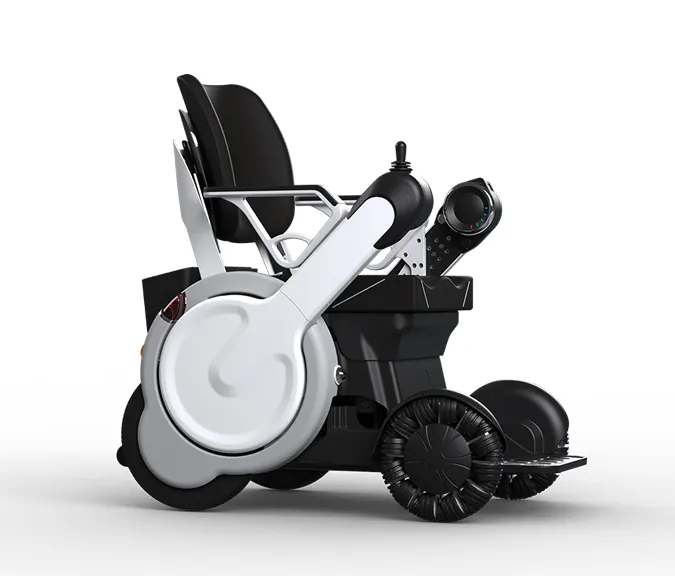
Multi-directional mobility: Omni-Wheels enable the wheelchair to move smoothly in any direction, not just forward and backward and turning.
Better maneuverability: Due to the design of the omni wheel, wheelchair users can more easily perform complex movements such as diagonal or in-situ rotations, increasing the wheelchair's flexibility and the user's independence.
Reduce space requirements: Traditional electric wheels require a larger space when turning, but SECURE omni wheels can move and turn in a smaller space, which is an obvious benefit for users who live in small spaces.
Improved comfort and safety: Omni wheels help equipments move more smoothly and reduce vibration thereby improving ride comfort.
Enhanced user independence: Being able to move freely within narrow or restricted spaces means users can complete daily activities more independently and be less dependent on others.
Improved social interaction: Flexible mobility allows wheelchair users to more easily adjust position and orientation in social situations, improving interactions with others.
SECURE can be a reasonable option. SECURE omni wheels feature a multidirectional wheel design that allows forward, sideways, diagonal movement, and in-place rotation, providing excellent maneuverability for robots and automated equipment. Paired with an omni wheel motor, SECURE omni directional robot wheels ensure precise control and smooth movement, and are widely used in AGVs, robotics, and omnidirectional car wheels applications.
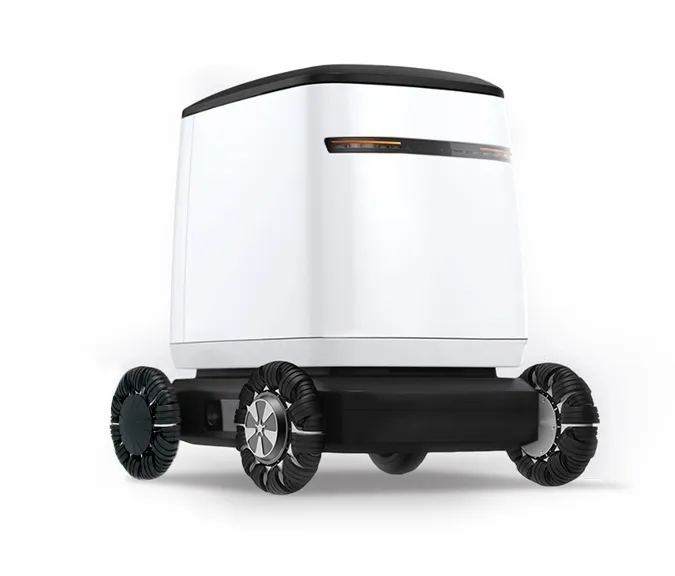
Omnidirectional robot wheels are commonly used on service robots, medical robots, AGVs, inspection platforms, warehouse equipment, and other indoor mobile systems that require lateral movement, compact turning, or in-place rotation. The final wheel configuration should be selected according to platform load, wheel layout, drive system, floor condition, and control requirements.