When Load Handling Becomes a Critical Part of Medical Equipment Design
In modern healthcare environments, medical equipment is becoming larger, heavier, and more multifunctional. Hospital beds integrate monitoring systems, diagnostic devices are mounted on mobile platforms, and treatment carts carry increasingly complex supplies. As a result, medical equipment casters are no longer simple mobility accessories—they are critical load-bearing components that determine safety, stability, and usability.
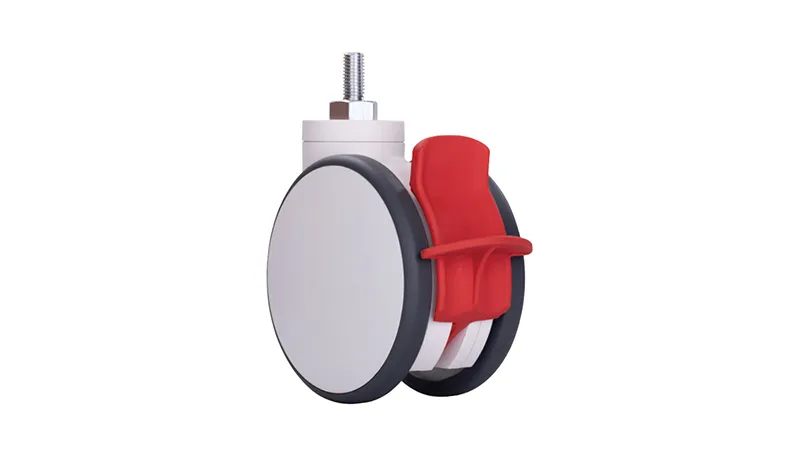
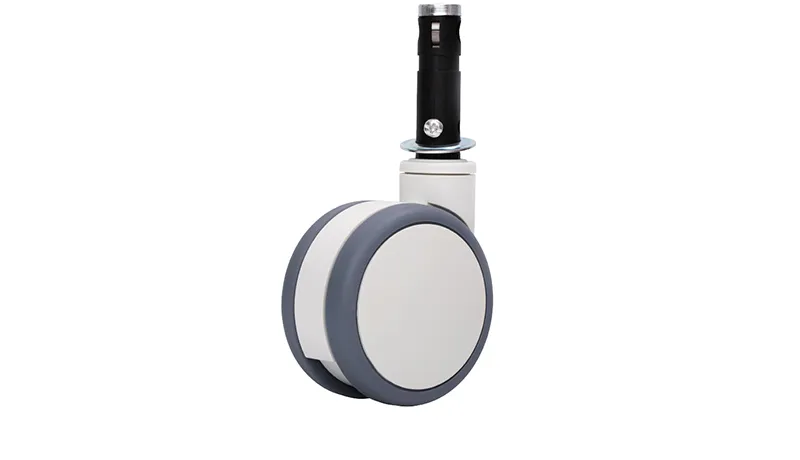
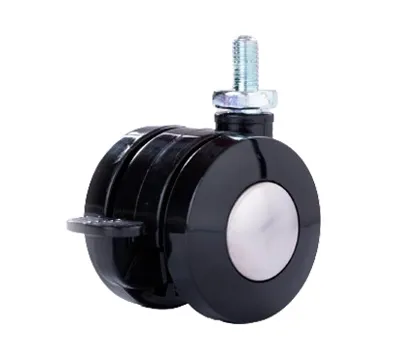
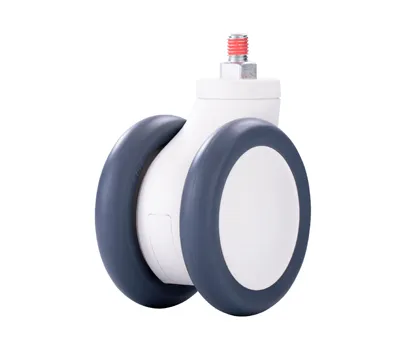
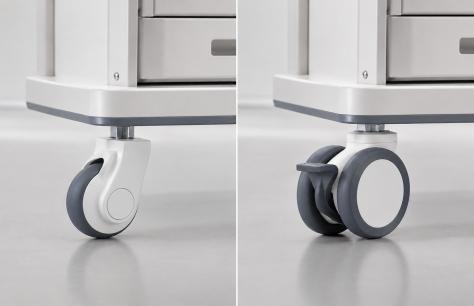
Within this context, twin wheel casters have become a preferred solution for many healthcare applications. Their dual-wheel structure is specifically engineered to improve load distribution while maintaining smooth and controlled movement.
What makes them particularly valuable in hospitals, nursing homes, and rehabilitation centers is not only their strength, but also their ability to maintain quiet and stable operation under continuous use.
Why Load Distribution Matters More Than Ever in Medical Mobility
Unlike traditional castor wheels, which rely on a single contact point, dual casters use two wheels to share the load. This seemingly simple change has a significant impact on performance in medical environments.
By distributing weight across two rolling surfaces, twin wheel casters reduce pressure on each wheel. This leads to less deformation, smoother rolling resistance, and improved structural stability. In practical terms, it means that heavy medical equipment such as beds, imaging devices, and mobile workstations can be moved with greater control and less physical effort.
This improved load distribution also plays a key role in noise reduction. When pressure is uneven on a single wheel, it often leads to vibration and irregular rolling sounds. In contrast, dual wheel swivel casters maintain a more balanced contact with the floor, significantly reducing noise generated during movement.
For healthcare facilities where silence is essential, this structural advantage becomes highly valuable.
The Relationship Between Stability and Silent Operation
In medical caster wheels, stability and noise performance are closely connected. A system that is unstable under load will inevitably produce vibration, which translates into unwanted sound. This is especially noticeable on hard flooring surfaces commonly found in hospitals and care centers.
Twin wheel castors improve stability by widening the rolling base. This creates a more secure platform for movement, reducing wobbling and micro-vibrations during transport. As a result, equipment moves more smoothly and quietly.
High-quality medical wheels used in dual-wheel systems often feature shock-absorbing materials such as TPU or TPR. These materials help dampen impact forces between the wheel and the floor, further minimizing noise during movement.
At the same time, precision bearings inside dual wheel stem casters ensure that rotation remains consistent and friction-free. This eliminates the grinding or squeaking noises commonly associated with lower-quality medical castor wheels.
The combination of structural balance and material engineering allows twin wheel swivel casters to deliver both high load capacity and quiet performance.
SECURE’s Engineering Approach to High Stability Medical Casters
As a specialized medical caster wheels manufacturer, SECURE focuses on engineering mobility solutions that perform reliably under demanding healthcare conditions. Instead of treating casters as simple components, SECURE designs them as integrated systems that directly affect equipment safety, stability, and usability.
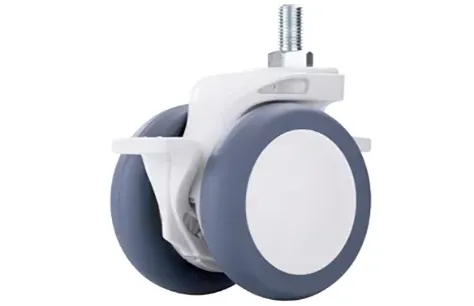
The company’s twin wheel caster solutions are developed with a strong emphasis on load balance and long-term durability. By combining dual-wheel architecture with precision bearings and optimized tread materials, SECURE ensures that its medical equipment casters maintain smooth and quiet performance even under continuous heavy use.
In healthcare environments, consistency is critical. SECURE’s medical casters are designed to minimize vibration under load, which not only improves stability but also reduces operational noise. This is especially important in hospitals and nursing homes where patient comfort depends on maintaining a quiet environment.
As a global wheel medical company, SECURE provides a wide range of solutions used across hospital beds, diagnostic systems, transport carts, and rehabilitation equipment. Each product is engineered to meet strict performance expectations for safety, durability, and low-noise mobility.
Real World Healthcare Applications of Twin Wheel Casters in Medical Equipment
In hospital environments, casters for medical equipment must support frequent and reliable movement of heavy devices. The stability of twin wheel casters ensures that beds, monitors, and treatment carts can be transported smoothly without sudden shifts or excessive vibration. This directly contributes to quieter corridors and less disturbance for patients.
In nursing homes, where residents require a calm and comfortable atmosphere, quiet medical castor wheels play a crucial role. Caregivers can move equipment during daily routines without disrupting rest or creating unnecessary noise, improving overall quality of life.
In rehabilitation centers, controlled movement is essential for patient safety. Dual wheel casters provide a stable rolling base that supports therapy equipment and mobility aids. Their smooth and quiet operation helps patients remain focused during recovery exercises.
Across all these environments, medical equipment wheels are not just mechanical parts—they are essential contributors to care quality, comfort, and operational efficiency.
Conclusion Load Stability as the Foundation of Quiet Medical Mobility
As healthcare equipment continues to evolve, the demands placed on mobility systems are increasing. It is no longer enough for medical casters to simply support movement—they must also ensure stability, safety, and a quiet operating environment.
Twin wheel casters represent a significant advancement in this regard. By improving load distribution and reducing vibration, they directly contribute to quieter and more controlled mobility in healthcare settings.
SECURE continues to refine these solutions through precision engineering and application-driven design. Its medical castor wheels are built not only for performance, but also for the demanding acoustic and operational requirements of modern healthcare.
In environments where every movement matters, stable and silent mobility is no longer optional—it is essential.