Centralized Wheel Control as a New Standard in Medical Equipment Mobility
In modern healthcare environments, mobility is no longer only about moving equipment from one place to another. It is about control, safety, and environmental quality. Hospital beds, treatment carts, diagnostic devices, and rehabilitation equipment all depend on casters for medical equipment to ensure smooth and reliable movement.
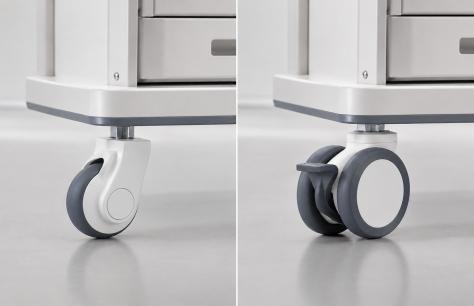
Among the most important innovations in this field is the central lock caster system. This system is widely used in hospitals, nursing homes, and rehabilitation centers because it allows caregivers to control multiple wheels at once while maintaining stability, safety, and increasingly, low-noise performance.
As a result, medical casters today are expected to deliver not only load capacity and durability, but also quiet and controlled motion in sensitive healthcare environments.
Why Central Lock Systems Improve Safety and Workflow Efficiency
The structure of central lock caster systems is designed to solve a critical problem in healthcare mobility: inconsistent wheel control across multiple contact points.
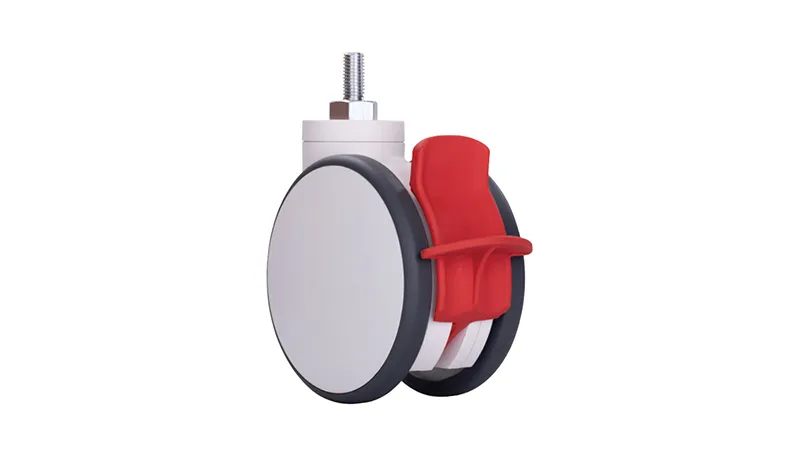
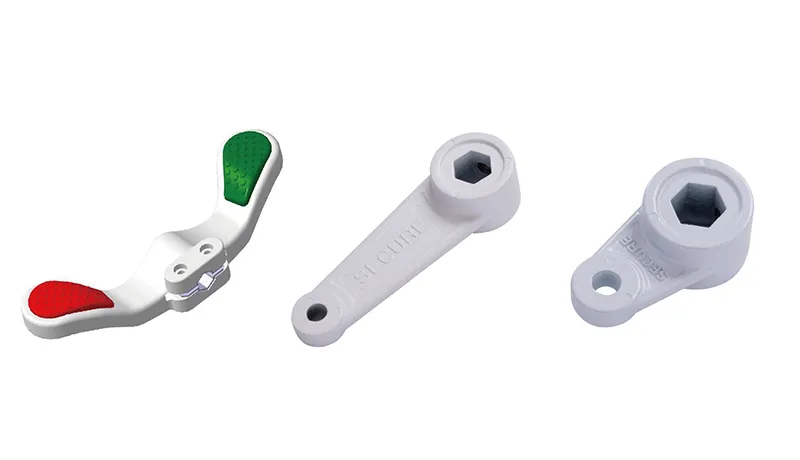
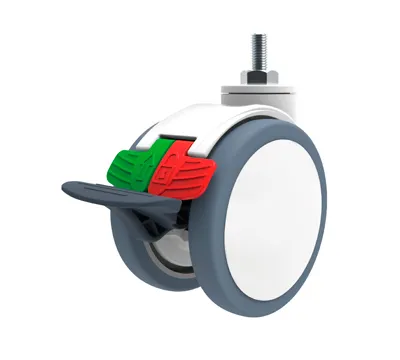
Instead of locking each wheel individually, a central locking wheel system allows staff to engage or release all casters simultaneously through a single control mechanism. This improves operational efficiency and ensures that medical equipment remains stable when needed.
In hospitals, this is especially important for hospital beds, emergency carts, and treatment devices that require both mobility and secure positioning. A properly designed caster medical system ensures that equipment can move smoothly when unlocked and remain completely stable when locked.
This dual functionality directly contributes to both patient safety and workflow efficiency.
Engineering Low-Noise Performance in Central Lock Medical Casters
While stability and control are primary functions, modern medical caster wheels must also meet strict requirements for noise reduction. In healthcare environments, even small mechanical sounds can affect patient comfort and recovery.
High-quality medical castor wheels used in central locking systems are designed with precision components that significantly reduce noise during both movement and locking operations.
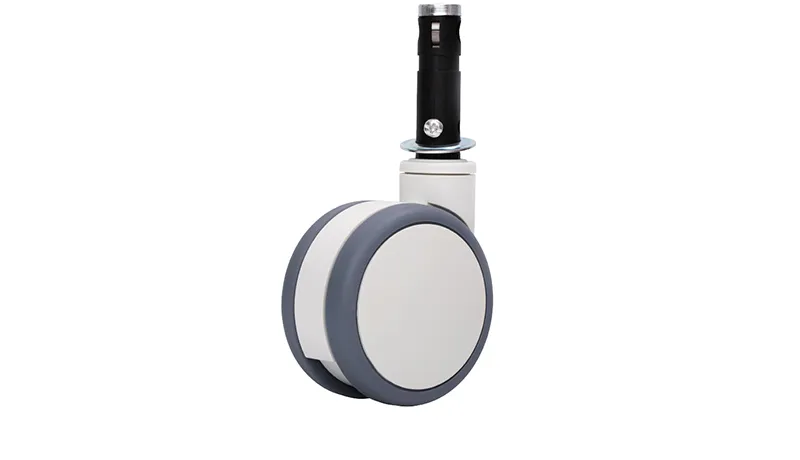
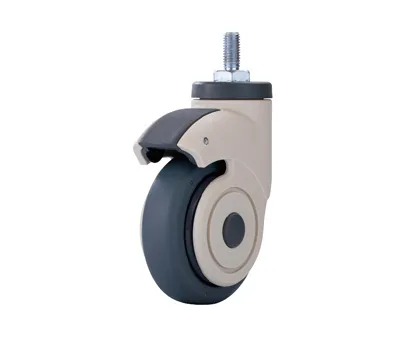
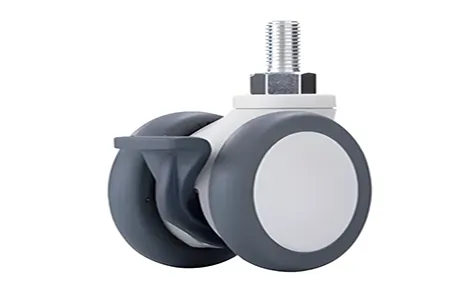
One of the key factors is material selection. Advanced nylon housings combined with soft tread materials such as TPU help absorb vibration and reduce impact noise. This ensures that medical wheels roll smoothly across hospital flooring such as tile, epoxy, or vinyl without generating excessive sound.
Another important factor is the use of precision bearings. In high-performance medical equipment casters, these bearings reduce internal friction, allowing for smoother rotation and eliminating the grinding or squeaking sounds often associated with lower-grade wheels.
Structural design also plays a critical role. A well-engineered medical device caster minimizes mechanical looseness, ensuring that all components remain stable under load. This prevents vibration noise during movement and extends long-term performance reliability.
Together, these elements allow central locking casters to deliver both secure control and quiet mobility.
Real World Use of Central Lock Casters in Healthcare Facilities
In hospitals, medical equipment wheels must support constant movement of critical devices while maintaining a quiet environment. The smooth operation of central lock casters ensures that beds, monitors, and carts can be transported without disturbing patients, particularly during nighttime care.
In nursing homes, where residents live long-term, noise reduction becomes even more important. Quiet medical casters help maintain a peaceful atmosphere, allowing caregivers to perform daily operations without disrupting rest or comfort.
In rehabilitation centers, stability and silence are equally important. Equipment must often be repositioned during therapy sessions, and central locking wheels ensure that movement is both controlled and quiet, supporting patient focus and safety during recovery.
Across all these environments, casters for medical equipment are not simply mechanical components—they directly influence care quality and environmental comfort.
SECURE’s Role as a Specialist in Medical Mobility Systems
As a specialized medical caster wheels manufacturer, SECURE has developed a comprehensive range of mobility solutions designed specifically for healthcare applications. Its products are widely used in hospitals, nursing homes, rehabilitation centers, and medical device manufacturing.
SECURE’s engineering approach focuses on combining durability, precision, and acoustic performance. Its central lock caster systems are designed to provide smooth, reliable, and quiet operation under demanding conditions. By integrating precision bearings, durable materials, and optimized structural design, these casters ensure stable movement and low-noise performance across a wide range of medical equipment.
As a global wheel medical company, SECURE focuses on real-world application needs. Its medical casters are designed to support both heavy-duty and precision medical devices, ensuring consistent performance in environments where reliability is critical.
The company’s medical equipment casters are also designed with hygiene and durability in mind, supporting frequent cleaning and long-term use without performance degradation. This makes them suitable for high-demand environments such as ICUs, operating rooms, and emergency departments.
Where Central Lock Casters Improve Daily Medical Operations
In hospital environments, casters for medical equipment must support both mobility and stability. Central locking wheels allow hospital beds and treatment carts to move smoothly through corridors while ensuring complete immobilization during patient care procedures. This reduces both physical risk and unnecessary noise.
In nursing homes, quiet medical castor wheels are essential for maintaining a calm living environment. Caregivers can move equipment efficiently without disturbing residents, improving overall quality of life.
In rehabilitation centers, medical device casters must provide both smooth movement and precise control. The stability of central lock caster systems ensures safe positioning during therapy while maintaining a quiet environment that supports patient recovery.
Across all these applications, the performance of medical wheels directly contributes to safety, comfort, and operational efficiency.
Conclusion Quiet Control as the Future of Medical Mobility
The evolution of medical casters reflects a broader shift in healthcare toward precision, safety, and patient-centered design. Mobility systems are no longer judged solely by strength or durability—they must also support quiet and controlled operation.
The central lock caster represents a key advancement in this evolution. By combining synchronized control with low-noise engineering, it enables healthcare facilities to maintain both operational efficiency and environmental comfort.
SECURE continues to innovate in this field, delivering high-performance medical equipment casters that meet the complex demands of modern healthcare.
In environments where every movement matters, quiet control is not just a feature—it is a fundamental requirement for better care.