In the rapidly evolving world of automation, a mobile robot’s performance is entirely dependent on its foundational mobility. Whether you are engineering an advanced Autonomous Mobile Robot (AMR) for a smart warehouse or developing a high-precision humanoid platform, your mobility architecture dictates your system's agility, payload capacity, and overall efficiency. Choosing the right robot caster wheel involves much more than selecting a component that rolls; it requires a deep understanding of kinematics, material science, and drive integration.
As the robotics industry transitions toward smarter, multi-directional movements and tighter spatial turnarounds, engineering teams face critical decisions regarding robot wheel design. This comprehensive guide breaks down the essential parameters of robotic mobility, explores the diverse ecosystems of wheels, and provides a clear framework to optimize your fleet's uptime and operational precision.
Decoding Types of Wheels Used in Robotics: From Fixed Casters to Omnidirectional Agility
To build a high-performance mobile platform, engineers must first establish a clear taxonomy of the robot wheels types available on the market. Each design offers a distinct mathematical and physical tradeoff between directional control, traction, and control complexity.
l Standard / Fixed Wheels: These track along a singular, fixed axis. They provide exceptional directional stability and high load-bearing efficiency, making them ideal as primary drive units, though they require differential steering or pivoting to turn.
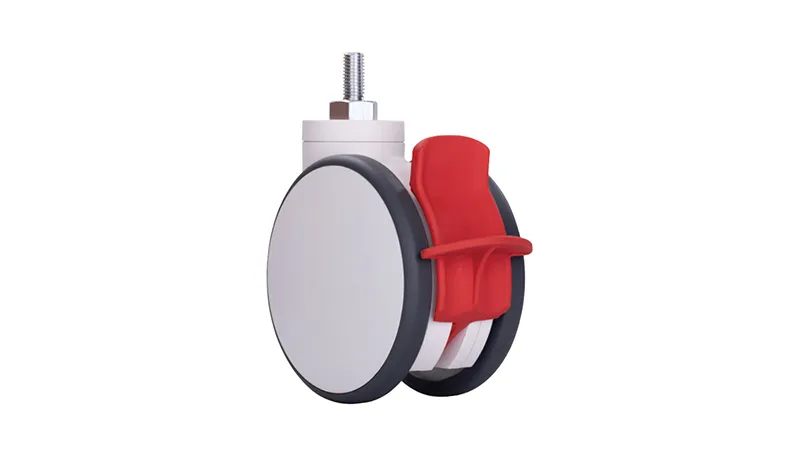
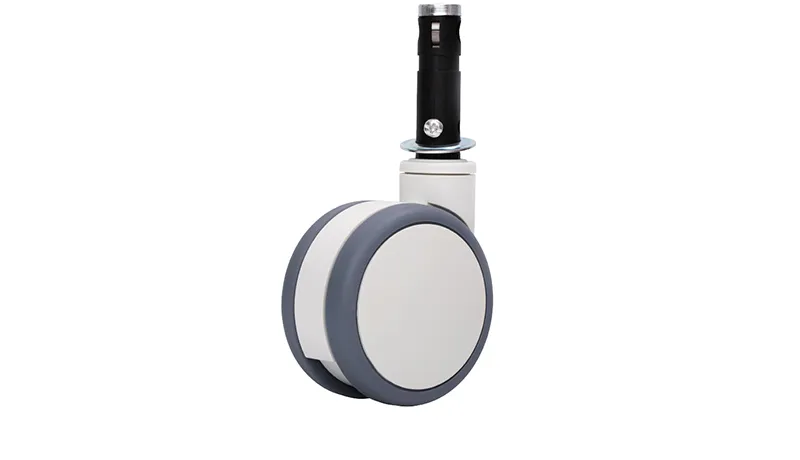
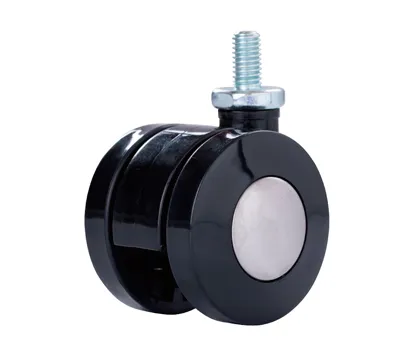
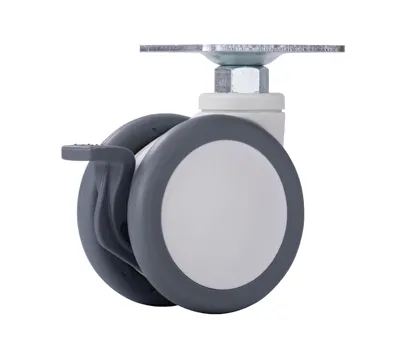
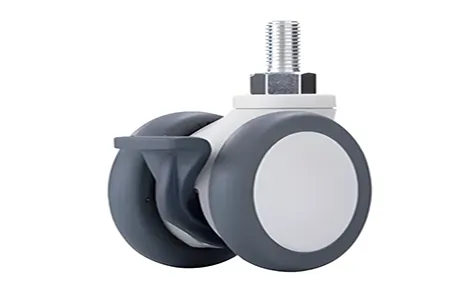
l Standard Swivel Casters: Operating as passive trailing units, a standard robot caster swivels 360 degrees to allow the robot to change directions. However, they suffer from "caster flutter" and require initial force to realign the wheel when reversing direction.
l Mecanum Wheels: Featuring peripheral rollers angled at 45 degrees, Mecanum designs allow for omnidirectional movement when utilized in a continuous four-wheel drive matrix. Their main drawbacks include high mechanical complexity, reduced efficiency on uneven floors, and a tendency to slip.
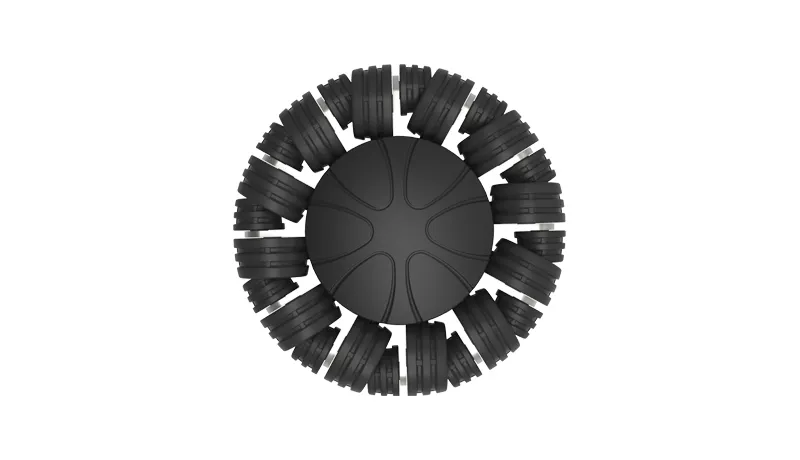
l Omnidirectional (Omni) Wheels: Utilizing small rollers perpendicular to the main wheel axis, premium robot wheels with omnidirectional capabilities achieve 360-degree agility—including lateral sliding and turning in place—without the tracking delays or offset scrubbing associated with standard swivels.
For modern applications demanding rapid pivot-turn responses and minimal floor friction, standard swivels are increasingly replaced by integrated omnidirectional matrices. This shift eliminates the mechanical lag of traditional steering, paving the way for superior path-planning algorithms.
Technical Deep Dive: Exploring Different Types of Wheels for Robots and Their Drive Mechanisms
Understanding the distinction between passive components and active robot drive wheels is fundamental to designing an efficient chassis. A robot’s drivetrain typically features a combination of driven components that propel the unit and passive components that stabilize the payload.
Drive Type | Core Roles | SECURE Solution |
Active Drive Units | Propels, accelerates, brakes, and handles system navigation. | Hub Motor / Electric Omnidirectional Wheels |
Passive Trailing Units | Stabilizes weight, balances the chassis, and absorbs vibration. | Premium Omni Wheels / Precision Robot Casters |
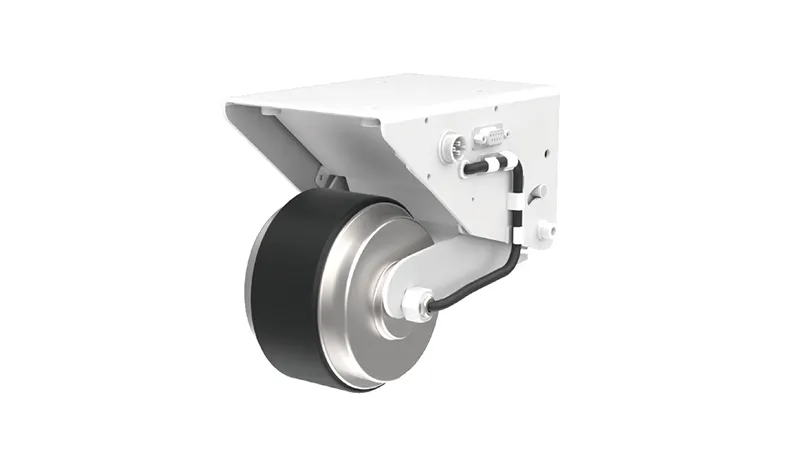
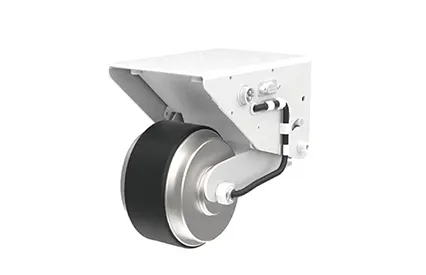
When optimizing active drivetrains, integrated robot drive wheels such as direct-drive Hub Motors have emerged as the gold standard. By embedding the brushless motor and planetary gearbox directly inside the wheel rim, engineers can eliminate belts, pulleys, and external transaxles. This reduces the robot's footprint, lowers acoustic noise, and minimizes mechanical points of failure.
To achieve unmatched spatial efficiency, cutting-edge platforms deploy Electric Omnidirectional Wheels. These dual-functional systems merge active motorized propulsion with 360-degree omni-travel rollers. The result is millimeter-level precision control during complex tracking maneuvers, allowing robots to seamlessly execute diagonal crabbing and sharp, zero-radius turns in tight industrial corridors.
Critical Factors in Robot Wheel Design: Load Capacity, Floor Protection, and Precision
Successfully scaling a robotic concept from a laboratory prototype to a rugged commercial deployment requires a meticulous approach to engineering metrics. When evaluating wheels used in robotics, several non-negotiable design constraints must be balanced:
1. Dynamic vs. Static Load Capacity
A common failure point in AMR fleets is calculating wheel strength based solely on static weight. Robot wheel design must account for dynamic forces—such as sudden braking, centrifugal forces during high-speed cornering, and uneven weight distribution when traversing ramps or thresholds. A safety factor of at least 1.5x to 2.0x the maximum static load is highly recommended.
2. Polyurethane Durometer and Floor Synergy
The hardness of the wheel tread directly influences both rolling resistance and floor traction. Soft elastomeric compounds (75A–85A Shore durometer) offer excellent shock absorption and floor protection, making them ideal for delicate medical environments. Conversely, harder polyurethane formulations (95A–70D Shore) lower rolling resistance and prevent flat-spotting under heavy industrial loads, though they require smoother surfaces to maintain continuous traction.
3. Precision Engineering and Backlash Elimination
For autonomous navigation systems guided by LiDAR or visual SLAM, wheel tolerances are paramount. Micro-variations in wheel concentricity or excessive play in the internal bearings introduce encoder drift, which degrades tracking accuracy. High-precision ball bearings and rigid core architectures ensure that every rotation matches the telemetry data perfectly, keeping the system tightly aligned with its digital twin map.
Match Your Kinematics: Selecting the Best Wheels of Robot for Commercial and Industrial Applications
Mobility needs are highly application-specific. No single wheel configuration fits every environment. Selecting the optimal wheels of robot architecture requires assessing the exact operational landscape the machine will navigate.
Warehousing & Logistics AMRs: These environments demand continuous uptime, high load capacities, and rapid acceleration. The ideal setup pairs centralized heavy-duty robot drive wheels with specialized polyurethane passive casters to maximize battery life and ensure structural stability on polished concrete.
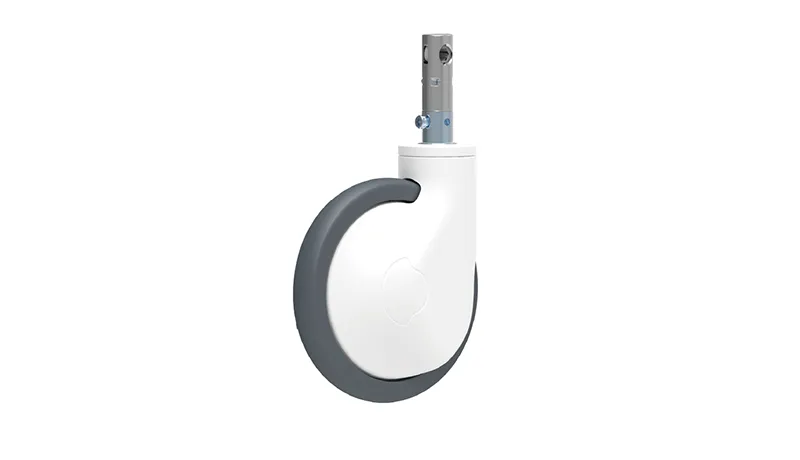
Medical & Surgical Robotics: Healthcare spaces require cleanroom compliance, silent operations, and completely non-marking materials. Choosing an advanced, enclosed robot caster wheel engineered with anti-static, shock-absorbing properties prevents electromagnetic interference and ensures stable transport around sensitive medical instruments.
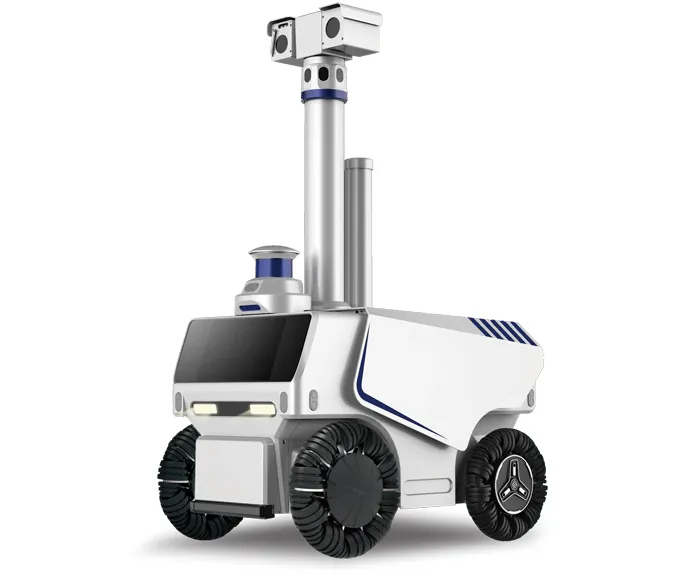
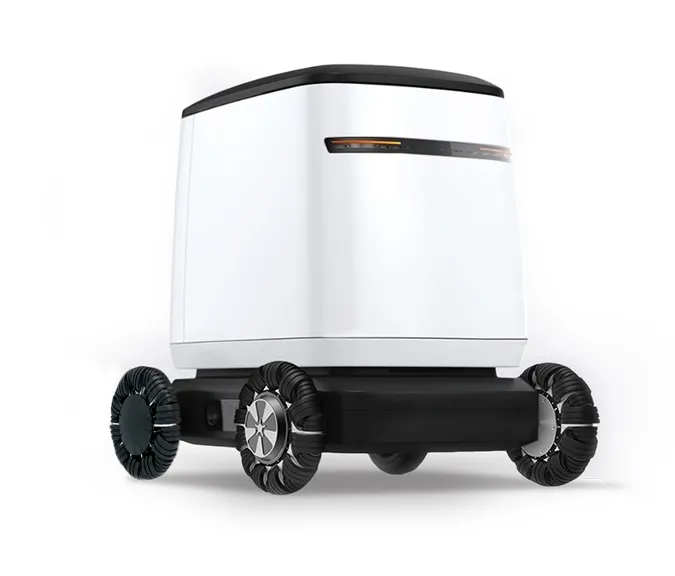
Commercial Service & Cleaning Robots: Navigating dynamic public spaces filled with unexpected obstacles requires maximum agility. Utilizing high-grade Robot Wheels built with omnidirectional rollers allows these units to move sideways and dodge obstacles fluidly without changing their forward orientation, optimizing path planning in crowded environments.
Why SECURE Casters is the Trusted Partner for Global Mobile Drive Solutions
Designing high-performance autonomous mobility systems requires premium components backed by a reliable, scalable supply chain. SECURE Casters delivers industry-leading mobile drive technology across medical, industrial, logistics, and robotics sectors worldwide.
Feature / Core Strength | Advantage Details |
Award-Winning Design | Awarded the prestigious German iF Design Award for patented Omni Wheels and Electric Omni Wheels. |
Massive Scale | Operates a dedicated factory achieving an annual output of over 3 million premium caster and wheel sets. |
Unrivaled Expertise | Recognized as an elite industry leader in high-precision, ultra-reliable medical and intelligent equipment casters. |
Our advanced Robot Wheels feature integrated international patents, providing platforms with seamless 360-degree agility and millimeter-level travel accuracy. By managing our production from raw material compounding to final precision assembly, SECURE Casters guarantees that every component delivers exceptional floor protection, silent operation, and long-term durability.
Whether your project demands standard, highly precise passive casters or fully motorized, integrated hub units, our engineering team provides customized solutions tailored precisely to your specific load profiles and chassis kinematics.
Conclusion: Future-Proofing Your Autonomous Platform with Advanced Wheels Used in Robotics
In autonomous systems, the drive chassis serves as the physical link between software logic and real-world execution. Selecting the correct different types of wheels for robots is an essential step that directly impacts structural reliability, tracking precision, and overall battery efficiency. Overlooking key engineering metrics like dynamic load factoring, tread hardness, or bearing tolerances can lead to frequent downtime and costly maintenance cycles.
Investing in high-quality mobility components future-proofs your autonomous fleet, ensuring your systems operate safely and fluidly across demanding industrial and healthcare landscapes. If you are ready to elevate your mobile platform's performance with award-winning drive technology, contact us today. Our application engineers are standing by to help specify, design, and scale the perfect mobility solution for your next-generation layout.